
Shop and Warehouse Epoxy Floors Around Albany, Oregon
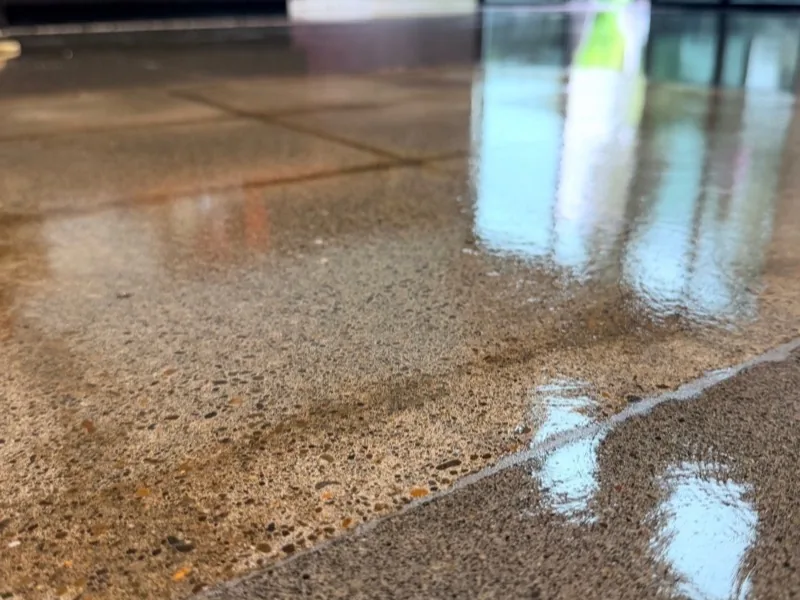
Quick answer: A shop or warehouse epoxy floor is a high-build resin coating over a ground slab that resists oil, coolant, tire marks and impact, brightens the space, and makes cleanup easy. Around Albany it is common in detached shops, pole barns with slabs, farm equipment bays, and light-industrial buildings. Grinding, oil treatment and a moisture check come first. Call (541) 960-4797 for a free on-site assessment.
Why shops in the mid-Valley are a special case
Look around Linn, Benton and Marion counties and you will find detached shops everywhere: on rural parcels outside Tangent, Scio and Halsey, behind houses in Lebanon, on farms that grow grass seed, hazelnuts and vegetables, and in light-industrial buildings along Interstate 5. Many of these buildings house real work: welding, woodworking, restoration, equipment repair, storing tractors and trailers. The floor takes a beating and, in a wet climate, it sits on damp ground for much of the year.
A shop slab is often thicker but rougher than a house garage slab. It may have been poured decades ago, sat uncoated for years, been repeatedly soaked with oil, and be tied to a pole-barn structure that moves slightly with the seasons. All of that changes how we prep and which system we recommend.
What we do differently on a shop slab
- Heavier profiling. Diamond grinding, and on large floors shot-blasting, to remove contaminated concrete and open the surface.
- Oil treatment. Old oil in concrete keeps pushing back through a coating. We test for it and treat it rather than coating over it.
- Crack and joint strategy. Slabs move, especially those poured without proper base rock. Active cracks are detailed for movement; control joints are honored rather than bridged blindly.
- Moisture assessment. An unlined slab on wet ground can pass a lot of vapor. We check before choosing, see the wet-climate guide.
- Traffic-appropriate build. A tool-and-jack-stand shop needs a different wear layer than a pallet-jack warehouse.
Floor systems for shops and warehouses
Most shop floors in our area are best served by a high-build pigmented epoxy with a hard, chemical-resistant topcoat, sometimes with light aggregate for traction. Where the building has daylight through big roll-up doors, a UV-stable topcoat keeps the color from ambering; see polyaspartic vs epoxy. If you also want the shop to look sharp for customers, a flake broadcast in the front bay and a plain solid color in the work area is a common, sensible split.
Light colors, like a mid-gray or off-white, dramatically improve lighting inside a shop and make it easier to find dropped bolts and see leaks, which matters more in a building that gets dark on a rainy afternoon.
Forklifts, lifts, and load points
A resin floor is only as strong as the concrete underneath. Epoxy is not a structural repair, and it will not fix a slab that is cracked through or sinking. For heavy point loads such as vehicle lifts, machine tool feet, and forklift wheels, we discuss slab thickness and condition and the coating build with you. If a slab needs structural work first, we will say so plainly and recommend you have it corrected before coating.
Planning the job
- Tell us about the building. Approximate size, what is in it, what fluids and equipment, and how old the slab is.
- On-site assessment. We walk the floor, note oil, cracks, previous coatings and moisture signs, and photograph problem areas.
- Written scope. Prep steps, layers, colors, striping, phasing, cure times and warranty terms.
- Clear and protect. Equipment is moved (we can phase so half the shop stays in use), and walls and doors are masked.
- Install and cure. Grind, repair, prime, coat and topcoat, then a written cure schedule before equipment goes back.
More detail is on our process page, and general cost drivers are in the cost guide. Businesses in town should also look at commercial epoxy flooring.
Maintaining a shop floor
Sweep regularly to remove grit, mop with a neutral degreaser, and squeegee water at the door in winter. Use pads under jack stands and floor-jack wheels that are in good condition. Avoid dragging steel across the surface and dropping heavy, pointed objects. Wipe fluid spills promptly; even chemical-resistant coatings appreciate not being soaked for days.
Frequently asked questions
Can you coat a pole-barn or farm shop slab?
Yes, if the slab is sound. We assess cracks, oil, moisture and how it was poured, and recommend a system accordingly.
Will epoxy hold up to lifts and heavy equipment?
A well-built high-build system resists wheel traffic and abrasion, but it does not replace slab strength. We discuss point loads and slab condition before recommending a build.
Should I use a light or dark color in my shop?
Light and mid-gray floors improve visibility considerably and make it easier to spot leaks and dropped parts.
Can we keep working during the job?
Often we can phase the floor in sections. The plan is agreed in writing.
Related pages
Ready for a straight answer on your floor? Call or text (541) 960-4797 or send the quote form for a free on-site estimate.
Call (541) 960-4797