
Flake Epoxy Floors in Albany, Oregon
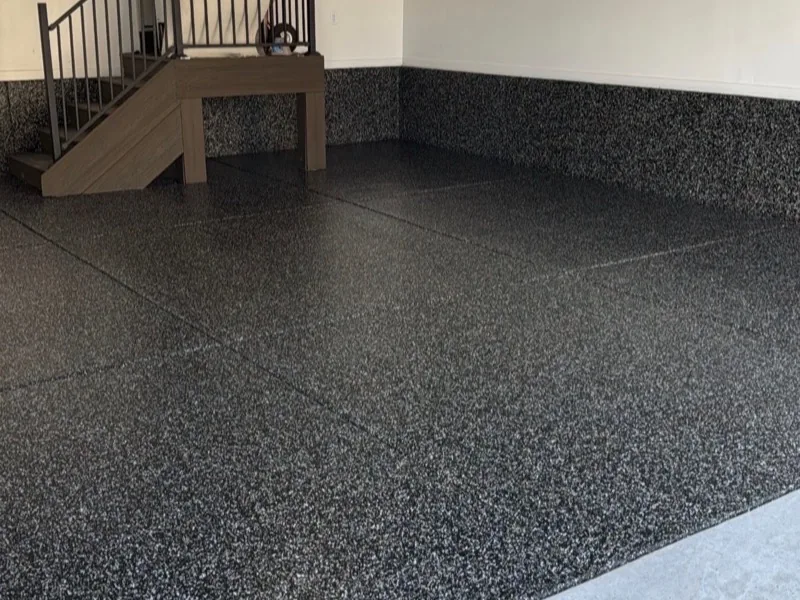
Quick answer: Flake epoxy, also called chip or decorative-flake epoxy, is a base coat of epoxy with colored vinyl flakes broadcast into it and sealed under a clear topcoat. It is the most popular garage floor in Albany because the flakes hide dirt and leaf debris, add grip when floors are wet, and come in dozens of blends. It is installed over diamond-ground concrete in one to three days. Call (541) 960-4797 for a free estimate.
How a flake epoxy floor is built
A flake floor is a layered system, and each layer has a job. After the slab is ground and repaired, a pigmented epoxy base coat is rolled out. While it is still wet, vinyl flakes are thrown into it by hand until the surface is fully covered, which installers call broadcasting to rejection. Once the base has set, the loose flakes are scraped and swept off, and one or two clear topcoats are applied to lock everything in and build a wear layer you can mop.
The result is a floor that is thick, textured and seamless. Because the flakes are multi-color, small spills, tire marks, fallen leaves and grit simply disappear into the pattern. That is the reason flake systems dominate in wet-climate garages: in a valley where cars come in dripping and muddy from October through May, a floor that hides dirt is a floor you actually enjoy.
Choosing flake size, color and coverage
Flake blends range from subtle grays and tans that read as concrete-with-character, to high-contrast black-and-white mixes, to browns, blues and earth tones. A few practical points help when you choose:
- Full coverage vs. partial. A full broadcast gives the deepest camouflage and the most texture. A lighter broadcast leaves more base-coat color visible and a smoother surface.
- Light vs. dark. Mid-tone blends with several colors hide dirt best. Very light floors look bright in a dim garage but show tire marks more; very dark floors show dust and pet hair.
- Texture. Extra topcoat or an added anti-slip grit can be specified for floors near doors, ramps or wash areas that stay wet.
- Coved base. Carrying the coating up the wall a few inches gives a bathtub-style edge that keeps water and dirt off the drywall.
We bring samples to the estimate because flakes look different under garage lighting than they do on a screen.
Why flake works well for Albany garages and patios
The mid-Valley combines rain, moss and fir needles, farm dust in summer, and homes whose garages double as workshops, mudrooms and overflow storage. A flake floor stands up to all of that. It is chemical-resistant, shrugs off oil and antifreeze when wiped, and cleans with a push broom and mop. Outdoors, flake also works on covered patios, porches and walkways, though outdoor concrete needs a UV-stable topcoat so it does not yellow; we talk through that on-site, and polyaspartic vs epoxy explains the difference.
Flake is also forgiving of imperfect concrete. Older Albany slabs, including those in the historic Monteith and Hackleman neighborhoods, often have patches, hairline cracks and old stains. After proper repair, a full broadcast masks the remaining cosmetic variation far better than a solid color or a metallic finish would.
Prep matters more than the flake
The prettiest blend in the world will peel if the bond line is weak. Every Albany Epoxy flake floor starts with diamond grinding to profile the concrete and remove laitance, old sealers and paint. Cracks and spalls are repaired, joints are detailed, and the slab is checked for moisture. Damp concrete is the single most common cause of flake floors delaminating in Oregon, which is why the wet-climate guide is worth a read before you sign anything, ours or anyone else's.
What the finished floor is guaranteed against, and what falls outside a warranty, is written into your contract; the general framework is on prep & warranty.
Flake vs. metallic vs. solid
| System | Look | Hides dirt? | Best for |
|---|---|---|---|
| Full-flake | Speckled, textured, many blends | Excellent | Everyday garages, patios, shops |
| Metallic | Marble-like swirls, high gloss | Moderate | Finished garages, showrooms, living spaces |
| Solid color | Clean, uniform | Low | Workshops, utility rooms |
If you are still deciding, our garage floor coating page compares the whole range, and the cost guide covers how each typically prices in general terms.
Care and maintenance
Sweep or blow off grit weekly. Damp-mop with a neutral cleaner; avoid strong solvents and abrasive pads. Pick up road salt and cinder residue in winter, since grit ground under a tire is what scratches a topcoat over time. Felt or rubber pads under jack stands and metal shelving prevent point-load marks. If a spill lands, wipe it promptly.
Frequently asked questions
How long does a flake epoxy floor last?
Lifespan depends on prep, moisture conditions, traffic and topcoat. Published industry guides commonly cite roughly ten to twenty years for professional systems in residential garages, but those are general figures and not a guarantee. Our warranty terms are written per contract.
Is flake epoxy slippery when wet?
The flakes and topcoat give it more texture than bare troweled concrete. For wet-entry garages we can add anti-slip grit to the topcoat.
Can flake epoxy be installed over old paint or an old coating?
Only if the existing coating is well bonded and can be ground. Peeling paint or failing epoxy generally has to be removed first.
Can you do flake on a patio or porch in Albany?
Yes, with a UV-stable topcoat and attention to drainage and moisture. See the polyaspartic guide for why outdoor slabs are treated differently.
Related pages
Deciding between systems? Read flake vs metallic epoxy.
Ready for a straight answer on your floor? Call or text (541) 960-4797 or send the quote form for a free on-site estimate.
Call (541) 960-4797